Our very first experience as foster parents started with an emergency phone call.

COVID hair was a real thing.
“Hey, we have two kids who need an immediate home,” our Foster Agency Supervisor told us. “They may need a permanent home, we don’t know. We just know that they need somewhere to go.”
Shane and I simply said, okay. We didn’t know what to expect. We just knew that our overall intention when we began this journey was to eventually adopt, but to get there, we had to open our hearts and our home to foster placements first.
Perfect Timing, Right?
It was late March, right at the beginning of the COVID-19 lockdowns in the US. We were all adjusting to working from home, and the need for emergency foster placements was surging due to an increase in domestic issues. At the time, I (Adrian) was finishing a master’s degree in Education to pursue advancement in my field. Perfect timing, right?
Regardless of the chaos in the world, we threw our names into the mix. The very next day, we welcomed a 3-year-old girl and an 18-month-old boy into our home.
Fostering these two kiddos was an absolute joy. The three-year-old had a vibrant, fun personality, and the 18-month-old never turned down a good kitchen dance-off. We put both kids in day care, where they absolutely thrived.

Navigating the System
When kids are first removed from their homes, a lot of requirements are placed on their biological parents to prove their responsibility and ability to safely parent. Sometimes, those hurdles can be incredibly tough—especially for people of color and those with low incomes, as every requirement carries a cost.
As part of our role, we took the kids to weekly visits at a predetermined location. They would see their bio parents for a bit and then come home with us. These transitions are notoriously tough for kids in foster care. They usually require a lot of extra work and patience from the foster family because of the behavioral regression that often follows. Fortunately, thanks to our training, we were able to identify those shifts early and get in front of the behaviors.
We fostered these amazing children for three months. That might not seem like a long time in the grand scheme of things, but in the day-to-day trenches of learning to love and care for new children, three months is a lifetime.
We grew fiercely protective of them. Selfishly, we hoped their bio parents would fail to meet their requirements. We felt these kids deserved better than a home with hard drugs and lead exposure. (The oldest child actually had lead poisoning that required monitoring—a dangerous reality we only discovered because of our medical visits).

The Driveway Goodbye
In May, we learned the kids were going to be placed with their grandmother. We were distraught. Confused, even. How could anyone take children out of a stable home where they had been flourishing, only to return them so close to the environments that had failed them?
But it was beyond our control.
On July 11th, they were removed from our home. We loaded them into two car seats in our driveway. They were incredibly sweet, and they knew they were leaving. They carried a mix of excitement to see their birth family, sadness at leaving us, and the heavy anxiety of not knowing what was to come. We sent them off with pictures of us together, plenty of stuffed animals, and hopefully, a feeling of love they could carry with them.
As they drove off, Shane and I had to maintain our strength. We waved with big smiles until they were out of sight.
Then, we walked back inside and the house fell silent. The grief was suffocating. We just hugged each other, both in tears. No words were shared—just a mutual understanding of the profound loss we were experiencing together.

On July 4 – The COVID kind. We did our own July 4th parade. Where there’s joy, there’s pride.
Finding Ground in Colorado
The feelings were overwhelming. We immediately messaged our foster care provider: The kids have left. We think we are going to take a pause for the meantime while we heal. As a teacher, I’d had experiences where students had to leave my classroom to return to their birth parents. I would read those emails and end up in tears, even knowing they were going to a good home. So we were honest with ourselves about what we needed now. We needed time.
Our agency responded beautifully: “Take as much time as you need.”
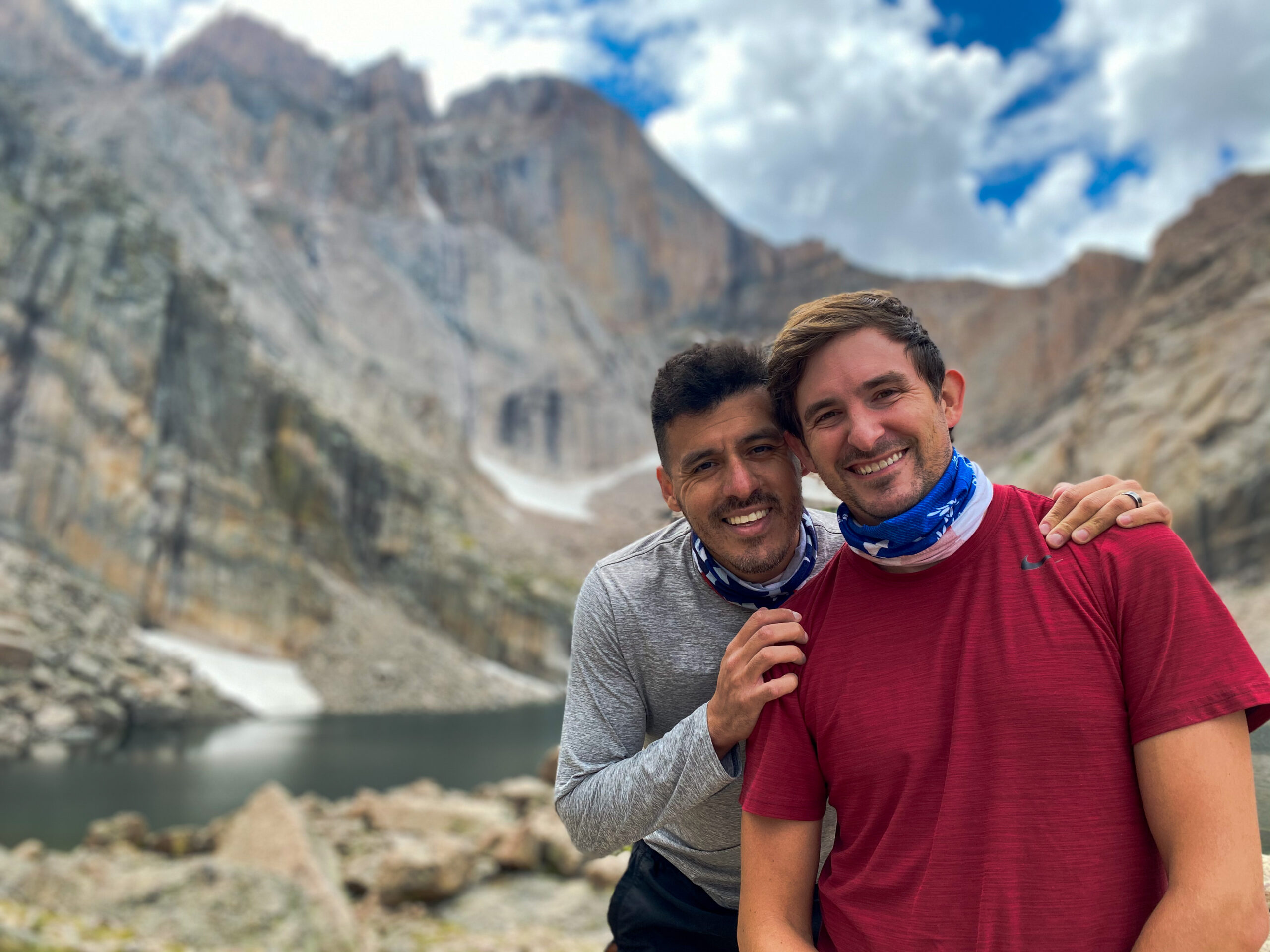
Shane and I needed a getaway, but it was July 2020 and the world was locked down. We couldn’t just get on a plane. So, we hopped in our car and drove to Colorado. We decided the best thing we could do was get out into nature and hike in Rocky Mountain National Park.
We hiked difficult trails, moderate trails, and easy trails. We let the earth ground us and allow us to feel. It was an incredibly healing experience. There is a beauty and a calming presence in nature that is too often taken for granted. In those mountains, we found ourselves again. We recentered, reestablished our purpose, and acknowledged the hard truth that we were not in control of the system, but there was a reason for what we were doing.

Our difficult hike to Chasm Lake. The final stop before the climbers take to the rock climbing of Diamond.
A Different Kind of Grief
On the drive home, we agreed on a timeframe before taking our next placement: three months. That was our magic number to get emotionally ready for the next group of kids.
As gay men, we experience a healthy amount of grief in our lives. Whether it’s through discriminatory legislation, families that deny us, friends that degrade us, or an environment that simply doesn’t accept us. Grief is a shared experience that queer people often face simply because of who we love.
But this shared grief as two foster dads was an entirely new feeling. It was a mix of hopelessness and helplessness—yet, at the same time, it brought a strange sense of empowerment. We knew our time would come. We didn’t know when, but we were not going to let this heartbreak stop our pursuit of becoming parents.
Marching Forward
Two months later, we received a call asking us to foster a 5-day-old baby who was in the NICU detoxing from drugs. We rose to the occasion. Two months after that—while still fostering the newborn—we were asked to take in a sibling group of three, ages 3, 9, and 11. We rose to that occasion, too.
After five months, the baby who we eventually named “JoJo” left our home. It created yet another wound, and it didn’t hurt any less. But this time, we managed our grief differently. We had three other children in our home who needed us at our absolute best. We put one foot in front of the other and marched forward.
If there is one thing I know for sure, it is that the grief of being a foster parent is profoundly real. But what eventually rises from that grief is a feeling that supersedes everything else.
Love. And love, eventually and always, heals.